Compare patio enclosure options for Mobile and Baldwin County homes, from screened rooms to sunrooms, with guidance on daily comfort, cost, and upkeep.
What Is the Best Material for a Coastal Deck?
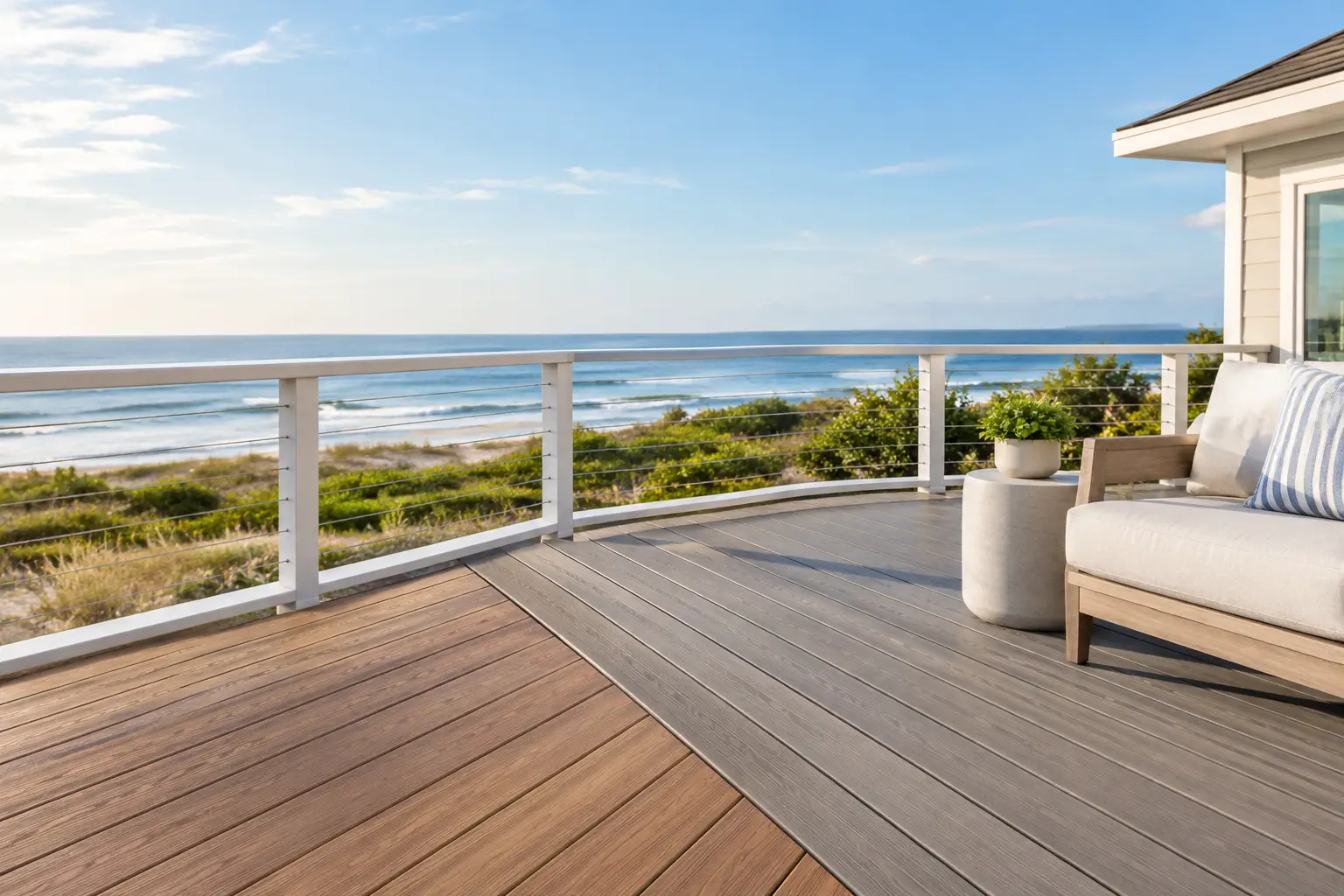
Salt air does not wait for a deck to get old before it starts doing damage. Along the Mobile Bay and Gulf Coast, humidity, intense sun, wind-driven rain, and tropical storms put every outdoor surface to work. Homeowners asking what is the best material for a coastal deck need an answer that accounts for those conditions, not just a good-looking sample board.
For most homes in Mobile and Baldwin Counties, a high-quality capped composite or PVC deck is the strongest long-term choice. Both resist moisture, insects, splintering, and rot far better than traditional wood. The right option between the two depends on your budget, how much sun the deck receives, the look you want, and whether heat underfoot is a major concern.
Why coastal decks need different materials
A deck in a dry inland area may mainly contend with sunlight and occasional rain. A coastal Alabama deck handles much more. Salt can settle on hardware and metal components. High humidity keeps framing and boards damp longer after a storm. Heavy rain tests drainage, while strong sun can fade finishes and make dark decking uncomfortable to walk on barefoot.
That does not mean a deck has to be maintenance-free to last. It does mean the materials, fasteners, framing details, and installation practices all need to work together. A low-maintenance deck surface installed over poorly protected framing will still create problems. Likewise, a beautiful wood deck can be a good fit only when the homeowner is prepared for regular care.
What is the best material for a coastal deck?
For many coastal homeowners, capped composite decking offers the best balance of appearance, comfort, durability, and maintenance. These boards combine a composite core with a protective outer cap that helps resist moisture, staining, fading, and surface wear.
Composite is especially appealing for families who want to enjoy their deck rather than spend weekends sanding, staining, or replacing splintered boards. It is available in colors and grain patterns that give a more finished appearance than basic treated lumber, and it holds up well through humid summers and frequent storms when it is installed correctly.
There are trade-offs. Composite costs more upfront than pressure-treated wood, and boards can get hot in direct sun, particularly in darker colors. It also expands and contracts with temperature changes, so proper spacing and fastening are essential. Those details are not optional on the Gulf Coast.
PVC decking for maximum moisture resistance
PVC decking is a strong choice where moisture exposure is the primary concern. Unlike composite, PVC boards do not contain wood fiber. That gives them excellent resistance to moisture damage, mold, and mildew, making PVC well suited to waterfront homes, pool decks, docks, and shaded locations where surfaces remain damp.
PVC is also lightweight and typically easy to clean. Many homeowners appreciate that it will not rot, crack, or splinter like wood. It is often one of the most durable premium options available.
The downside is cost. PVC can be more expensive than composite, and some products have a less natural appearance than higher-end composite boards. Like composite, it can also become hot under direct afternoon sun. Selecting a lighter color and considering the deck’s orientation can make a noticeable difference in comfort.
Pressure-treated wood for value-conscious projects
Pressure-treated lumber remains a practical deck material, particularly for homeowners who need a dependable deck at a lower initial cost. It is widely available, structurally capable, and can be stained or painted to suit the home.
In a coastal setting, however, pressure-treated wood requires commitment. The boards should be allowed to dry as recommended, then protected with a quality water-repellent stain or sealer. That finish needs inspection and renewal over time. Without consistent maintenance, wood can cup, check, split, fade, and develop mildew.
Pressure-treated lumber also varies in quality. Proper board selection, spacing, ventilation, flashing, and drainage make a major difference in how it performs. For a covered porch with limited direct exposure, wood may be a reasonable choice. For an exposed deck that receives full sun, wind-driven rain, and frequent use, many homeowners find the maintenance savings of composite worth the higher initial investment.
Natural hardwoods and modified wood
Hardwoods such as ipe and other dense tropical species can be exceptionally durable and striking. They resist insects and decay naturally, and their rich appearance is hard to duplicate. Modified wood products can also offer improved stability and moisture resistance compared with standard lumber.
These choices are not automatic winners for every coastal project. Hardwood installation can be labor-intensive, boards are heavy, and the material cost is substantial. The surface will weather to a silvery gray if left untreated, which some homeowners like and others do not. Restoring its original color requires periodic oiling and cleaning.
If the goal is a distinctive, high-end natural-wood deck, hardwood may be worth considering. If the priority is predictable maintenance and long-term convenience, capped composite or PVC is usually easier to live with.
Aluminum decking for specialized applications
Aluminum decking is an option for certain elevated or waterfront structures. It does not rot, warp, or attract termites, and it can provide a dry area beneath the deck when designed with interlocking drainage channels.
Its industrial look, sound underfoot, and higher price keep it from being the first choice for most residential backyards. Still, it can make sense for a second-story deck, a structure near the water, or a project where water management below the deck is a top priority.
The deck board is only part of the decision
The best decking surface cannot overcome poor construction practices. Coastal decks need a solid framing plan and corrosion-resistant connections. Salt and moisture can shorten the life of ordinary metal hardware, so appropriate galvanized or stainless-steel fasteners, connectors, and anchors are essential. The exact hardware selection should reflect how close the home is to saltwater and the exposure level of the deck.
Framing should be designed to drain and dry. Water trapped against joists, posts, or the house framing creates an avoidable maintenance problem. Proper flashing where the deck meets the home, adequate airflow beneath the deck, and careful post and beam detailing help protect the structure that supports the finished surface.
Railings matter, too. Aluminum rail systems are popular in coastal areas because they resist rot and require little upkeep. Composite railings can coordinate with the deck, while wood railings can work well when homeowners are willing to maintain them. Whatever material you choose, the railing must meet current safety requirements and be securely installed for the deck’s conditions.
How to choose the right option for your home
Start with how you plan to use the space. A shaded deck used for morning coffee has different needs than a large entertaining area exposed to west-facing afternoon sun. Barefoot comfort may lead you toward a lighter composite color, while a deck near a pool or waterfront may make PVC’s moisture resistance more attractive.
Next, be honest about maintenance. Wood can be beautiful and economical at the start, but it asks more of you over the years. Composite and PVC cost more at installation, yet they can reduce the recurring expense and labor of staining, sealing, and board replacement.
Finally, consider the home itself. A historic property, a cottage near the bay, and a newer home in Daphne or Spanish Fort may call for very different proportions, colors, railing styles, and materials. The right deck should look like it belongs with the house while standing up to the weather around it.
A practical recommendation for the Alabama coast
For an exposed residential deck in Mobile or Baldwin County, choose a quality capped composite board in a lighter or mid-tone color, paired with corrosion-resistant fasteners and well-detailed framing. This combination gives most homeowners the durable, low-maintenance outdoor space they want without giving up a warm, residential look.
Choose PVC when the deck faces persistent moisture, sits near a pool or waterfront, or needs the highest possible resistance to rot and mildew. Choose pressure-treated wood when upfront budget is the deciding factor and you are prepared to maintain it properly. Each can be the right material in the right setting.
A coastal deck is an investment in everyday living – cookouts after work, family gatherings, quiet mornings, and a place to enjoy the outdoors. Careful material selection and quality craftsmanship give that space the best chance to remain safe, attractive, and dependable through the seasons.
Related Posts