Is a sunroom worth it? See the costs, comfort factors, and value a well-planned sunroom can bring to homes in Mobile and Baldwin Counties, Alabama today.
Deck vs Patio Cost: What Alabama Homes Need
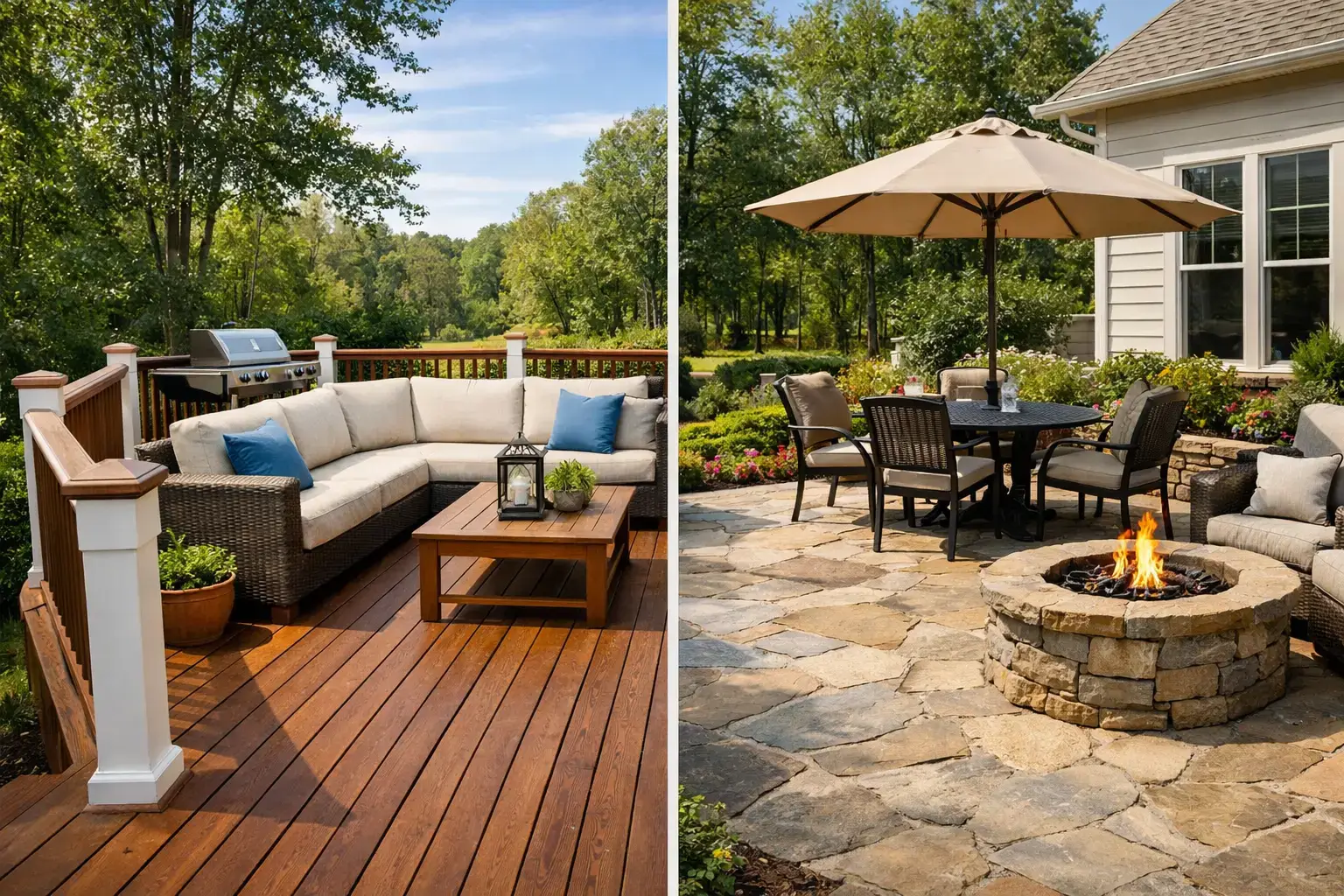
A backyard project can look simple from the kitchen window: add a place for a grill, a table, and a few chairs. Once planning starts, though, the deck vs patio cost question becomes more than a price comparison. The right choice depends on your yard, your home’s elevation, the materials you prefer, and how you expect to use the space for years to come.
For homeowners in Mobile and Baldwin Counties, local conditions matter. Heavy rain, humid summers, coastal weather, sandy or shifting soil in some areas, and occasional storm damage all affect how an outdoor project should be built. A lower initial price is not always the better value if the space needs frequent repairs or does not solve the reason you wanted it in the first place.
Deck vs Patio Cost: The Typical Difference
In general, a patio costs less per square foot than a deck. A basic concrete patio is often the most budget-friendly way to create usable outdoor space, especially on a level lot close to grade. A deck typically costs more because it requires a supporting structure, footings, framing, railings, stairs, and often more labor.
That broad rule has exceptions. A small ground-level wood deck may cost less than a large paver patio with extensive excavation, drainage work, retaining walls, or a custom pattern. Composite decking also carries a higher material cost than pressure-treated lumber, while decorative concrete, natural stone, and premium pavers can move a patio well beyond the cost of a simple deck.
The most useful comparison is not just cost per square foot. It is the cost to create a safe, durable, functional space on your specific property.
What Drives Deck Pricing
Deck costs are shaped first by height and structure. A deck built a few feet above the yard needs properly installed footings and framing to carry the load safely. If it connects to an elevated door, includes stairs, wraps around part of the home, or requires a large railing system, the scope increases quickly.
Material selection makes a major difference as well. Pressure-treated lumber remains a practical choice for many homeowners because it is economical and can be repaired or refinished over time. It does require regular attention, including cleaning, sealing or staining, and replacement of boards as they weather.
Composite decking has a higher upfront price but reduces much of the routine maintenance associated with wood. It can be a strong fit for homeowners who want the look of a finished outdoor living area without planning to stain it every few years. However, composite boards still need quality framing, correct spacing, and professional installation. The decking material does not make up for poor structural work underneath.
Railings, picture-frame borders, built-in benches, lighting, privacy screens, and covered sections also affect the final budget. These details can make a deck feel like a true extension of the home, but they should be planned early so the design and pricing are clear from the start.
What Drives Patio Pricing
Patio pricing depends heavily on site preparation. A patio needs a stable base and a planned slope that moves water away from the home. In our area, that drainage work is not an afterthought. Standing water, washout, and poor grading can shorten the life of an outdoor surface and create problems around the foundation.
A poured concrete patio is usually the simplest option. It provides a clean, durable surface and can be expanded with a covered roof, outdoor kitchen, or seating wall later if the original layout allows for it. Basic concrete is not necessarily plain, either. Finishes, scoring, staining, and stamped patterns can add visual interest, though each upgrade adds to the cost.
Pavers offer flexibility in design and can be repaired section by section if settling occurs. They also require careful base preparation, edge restraint, and proper installation to avoid movement and weed growth between joints. Natural stone creates a distinctive look but is generally more expensive due to material costs and labor.
If your yard slopes sharply or drains toward the house, a patio may require excavation, drainage solutions, or a retaining wall. At that point, the lower-cost reputation of patios may no longer apply. A deck can sometimes bridge a difficult grade more efficiently than trying to build up a large patio base.
Which Option Fits Your Yard?
A patio often makes the most sense for a home with a level backyard and a door close to ground level. It creates an easy transition from indoors to outdoors, works well for grilling and entertaining, and can be especially convenient for homeowners who want few steps and a firm surface underfoot.
A deck is often the better answer when the back door sits above the yard. Rather than building a long set of stairs down to a patio, a deck can meet the door at a comfortable level and provide a natural outdoor landing area. Decks are also useful on sloped lots where leveling enough ground for a patio would require significant site work.
Think about sightlines, too. An elevated deck can capture a view of the water, trees, or backyard that would be lost from ground level. On the other hand, a patio may feel more connected to a pool, garden, fire pit, or lawn where children and grandchildren play.
Maintenance and Long-Term Value
The initial estimate is only one part of the decision. Wood decks need regular maintenance to manage moisture, sun exposure, and normal wear. In coastal Alabama, humidity and rain make timely cleaning and sealing especially worthwhile. Neglect can lead to splintering, discoloration, loose fasteners, and early board replacement.
Composite decks usually require less upkeep, but they cost more upfront and can still show dirt, mildew, or scratches. A quality patio can be relatively low maintenance, although concrete may crack over time and pavers may need occasional joint-sand replacement, leveling, or cleaning.
Neither option automatically adds the same amount of resale value to every home. Buyers tend to respond to well-built, attractive outdoor spaces that suit the house and the neighborhood. A properly sized patio or deck that feels intentional can improve daily enjoyment now while making the home more appealing later. An oversized feature, a poorly drained surface, or a deck that looks disconnected from the home can have the opposite effect.
Do Not Overlook Permits and Construction Details
Decks commonly require permits because they are structural, attached to the home, or elevated above grade. Patio permit requirements vary depending on the design and whether the project includes a cover, electrical work, plumbing, or changes to drainage. Local requirements can differ by municipality and county.
A dependable contractor should address the practical details before construction begins: how the project ties into the home, where water will go, what materials are appropriate, whether permits are needed, and how the finished area will be accessed. Clear communication before work starts helps prevent expensive changes halfway through the project.
For a deck, ask about footing depth, framing materials, flashing at the house connection, fasteners, railing requirements, and stairs. For a patio, ask how the base will be prepared, how much slope is planned, where runoff will be directed, and whether existing irrigation, utilities, or tree roots affect the layout.
Choosing Based on How You Live
If you want the lowest-cost path to a simple outdoor dining area and your yard is level, a concrete patio may be the practical choice. If your home sits above grade, your lot slopes, or you want a space that connects directly to an elevated living area, a deck may offer better function even at a higher initial cost.
There is also a middle ground. Some homeowners benefit from a deck near the house paired with a patio or fire pit area farther into the yard. Others choose a covered patio for shade and weather protection, which can change both the budget and the way the family uses the space.
The best project is not the one that wins a generic price comparison. It is the one built with quality craftsmanship, honest communication, and a clear plan for your home, your yard, and the way your family gathers outside. A thoughtful on-site estimate can turn the deck-or-patio decision from a guessing game into a project you will be glad to use every weekend.
Related Posts