Is a sunroom worth it? See the costs, comfort factors, and value a well-planned sunroom can bring to homes in Mobile and Baldwin Counties, Alabama today.
How to Select Bathroom Tile That Holds Up
A bathroom can look beautifully updated on installation day and still become frustrating to live with if the tile choice does not suit the room. Slippery floors, stained grout, a tile that feels too busy in a small space, or a wall finish that clashes with the vanity can take away from an otherwise well-planned renovation. Knowing how to select bathroom tile means balancing the look you want with the daily demands of a hardworking room.
For homeowners in Mobile and Baldwin Counties, that decision also deserves a practical view. Humidity, wet feet, family traffic, cleaning habits, and the age of the home all affect which materials and finishes make sense. The best tile is not always the most expensive or the most dramatic sample in the showroom. It is the option that fits your space, your budget, and the way your household actually lives.
Start With the Role of Each Tile Surface
Bathroom tile does not have one job. Floor tile needs to provide secure footing and stand up to water, while shower walls need dependable moisture protection behind them. A backsplash may be chosen mainly for appearance, and an accent wall can add personality without needing the same durability as a shower floor.
Porcelain is often a strong all-around choice because it is dense, water-resistant, durable, and available in a wide range of colors and patterns. It works well on bathroom floors, shower walls, and many shower floors when the tile size and finish are appropriate. Ceramic tile can be a good fit for walls and low-traffic areas, particularly when budget matters. Natural stone brings a distinctive, high-end character, but it generally requires more care, sealing, and attention to cleaning products.
Before settling on a material, decide where it will be installed. A glossy wall tile can reflect light beautifully behind a vanity, but that same finish is usually not the right choice under wet feet. One tile does not need to serve every surface in the room.
How to Select Bathroom Tile for Safety
Bathroom flooring needs traction. This becomes especially important in showers, near tubs, and in bathrooms used by children, older adults, or anyone planning to age in place. The goal is not a rough, difficult-to-clean floor. It is a finish with enough texture or grip to reduce slipping when water is present.
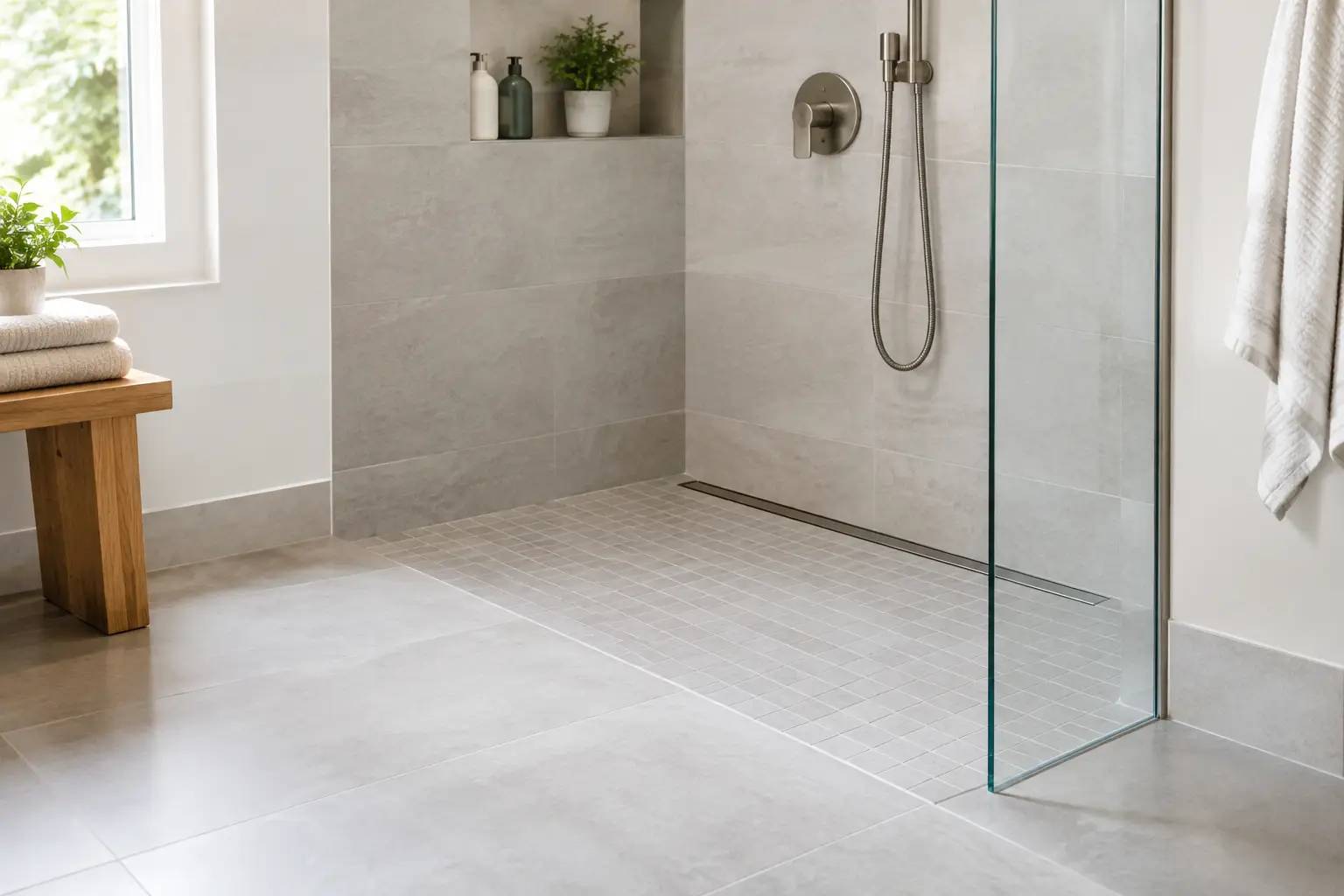
Look beyond a tile’s color and pattern to its stated floor-use and slip-resistance information. Matte and textured porcelain tiles are often practical choices for the main bathroom floor. In a shower, smaller tiles are frequently useful because more grout joints create additional traction and allow the surface to follow the slope toward the drain.
Large-format tile can create a clean, spacious look on a main floor, but it needs a properly prepared, very flat substrate. In a shower floor, large tiles can be difficult to slope correctly and may provide fewer grout lines for grip. This is one of those choices where the room’s construction details should guide the design, not the other way around.
Choose Scale Before Falling in Love With a Pattern
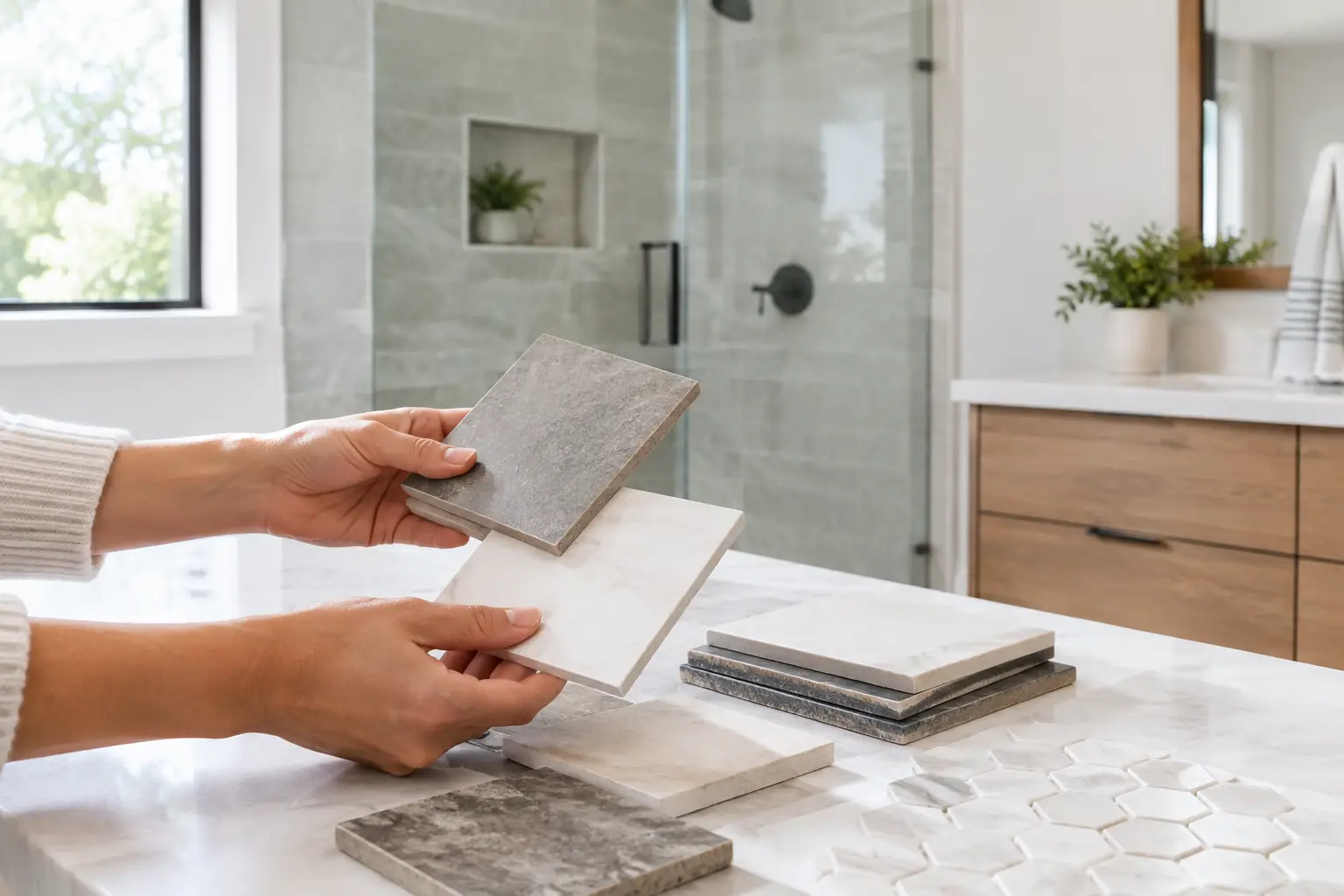
Tile samples can be misleading because you see them one piece at a time under showroom lighting. In a full bathroom, tile size, grout color, layout, and surrounding finishes all change the final effect.
A smaller bathroom does not automatically require small tile. Larger tiles can reduce the number of grout joints and create a calmer visual field. However, oversized tile may lead to awkward narrow cuts around a toilet, vanity, or shower footprint. A well-proportioned format usually looks more intentional than the largest tile available.
For a room that feels cramped, consider using a lighter floor tile and carrying a related tone onto the shower walls. That does not mean every surface must match. A controlled mix of finishes often adds more interest than using one tile everywhere. For example, a warm, stone-look porcelain floor can pair well with a simple off-white shower wall tile and a small patterned niche accent.
Pattern deserves the same restraint. A bold encaustic-style floor can be a strong focal point, especially in a powder room, but it may compete with a heavily veined countertop or busy wallpaper. If one finish makes a statement, let the other major surfaces stay quieter.
Plan the Color Palette Around Permanent Fixtures
Tile is expensive and labor-intensive to replace, so it should work with the bathroom elements that are likely to stay for many years. Bring cabinet, countertop, paint, fixture, and hardware samples together before making a final choice. Undertones matter. A white tile may read warm, cool, gray, cream, or slightly pink depending on the lighting and adjacent materials.
Natural light in a Fairhope or Daphne home can make a tile appear very different from how it looked in a store. In a bathroom with limited windows, warm lighting may soften cool gray tile, while bright daylight can reveal undertones you did not notice at first. Take samples home when possible and view them in the room during the morning, afternoon, and evening.
Neutral tile is a dependable foundation, but neutral does not have to mean plain. Texture, tile shape, a subtle handmade look, or a thoughtful layout can give the room character without locking you into a short-lived trend. If you want more color or pattern, a niche, backsplash, powder room floor, or single shower wall can be a more flexible place to use it.
Do Not Treat Grout as an Afterthought
Grout has a major effect on both appearance and maintenance. A high-contrast grout color highlights the shape and layout of the tile. That can look crisp with subway tile or hexagon tile, but it also makes every line more visible. A grout color close to the tile creates a quieter, more continuous appearance and can be more forgiving in a busy bathroom.
For shower floors and frequently wet areas, proper grout selection and installation matter just as much as the tile itself. Many homeowners also benefit from choosing a stain-resistant grout option and a grout color that will not show every bit of daily use. Bright white grout can be attractive, but it may require more frequent attention on floors or in a shower used by a large family.
Grout joints are also part of the design. Very narrow joints can look modern, while slightly wider joints may better suit handmade-look tile or a traditional bathroom. The right width depends on the tile’s edges, size variation, and manufacturer recommendations. A quality installation accounts for these details instead of forcing every tile into the same layout.
Account for Waterproofing and Existing Conditions
Beautiful tile cannot compensate for poor preparation. In a shower, the waterproofing system behind the tile is what protects the structure from moisture damage. The substrate, drain connection, shower pan slope, corners, and penetrations all need to be handled correctly before tile installation begins.
This is especially relevant in older Mobile homes and historic properties, where floors or walls may not be perfectly level, plumbing may need updating, and previous remodeling work can reveal surprises. A contractor should assess the existing conditions early so the tile plan fits the real space. Sometimes a homeowner’s preferred large-format tile is still possible, but the surface preparation may require additional work. Honest planning up front helps prevent expensive changes later.
If you are renovating for accessibility, tile selection should support that goal. A curbless shower, for example, needs careful drainage and flooring coordination. Small mosaic tile may be a better fit on the shower floor, while a stable, textured porcelain can provide confidence in the main bathroom area.
Set a Budget That Includes the Whole Installation
The price on the tile tag is only one part of the project cost. Tile setting materials, waterproofing, underlayment, grout, trim pieces, demolition, surface repair, labor, and waste allowance all belong in the budget. Intricate patterns, diagonal layouts, small mosaics, and large-format tiles can require more time and more material cuts than a straightforward layout.
It is reasonable to save on a simple field tile and invest in one smaller feature, such as a shower niche, decorative band, or vanity backsplash. That approach can create a custom look while protecting the budget for the work that should never be compromised, including waterproofing and skilled installation.
Order enough material for cuts, future repairs, and normal variations between boxes. Tile lots can change, and finding an exact replacement years later is not always possible. Keeping a few extra pieces after the project is complete is a practical safeguard.
Make the Final Decision With the Full Room in Mind
Before ordering, lay out your choices together: floor tile, shower wall tile, grout, vanity finish, countertop, paint, fixtures, and hardware. Ask how each choice will perform, not just how it will photograph. Consider who uses the bathroom, how much cleaning you are willing to do, and whether the design will still feel right after years of daily use.
At Integrity Remodeling & Construction, we believe good bathroom decisions come from clear communication and careful planning, not pressure. A well-chosen tile should give you a room that feels personal, functions safely, and is built to last. Bring your favorite ideas to the planning table, then let the realities of your home and the experience of a qualified remodeling team shape them into a bathroom you will enjoy using every day.
Related Posts