Is a sunroom worth it? See the costs, comfort factors, and value a well-planned sunroom can bring to homes in Mobile and Baldwin Counties, Alabama today.
Best Kitchen Storage Upgrades That Add Space
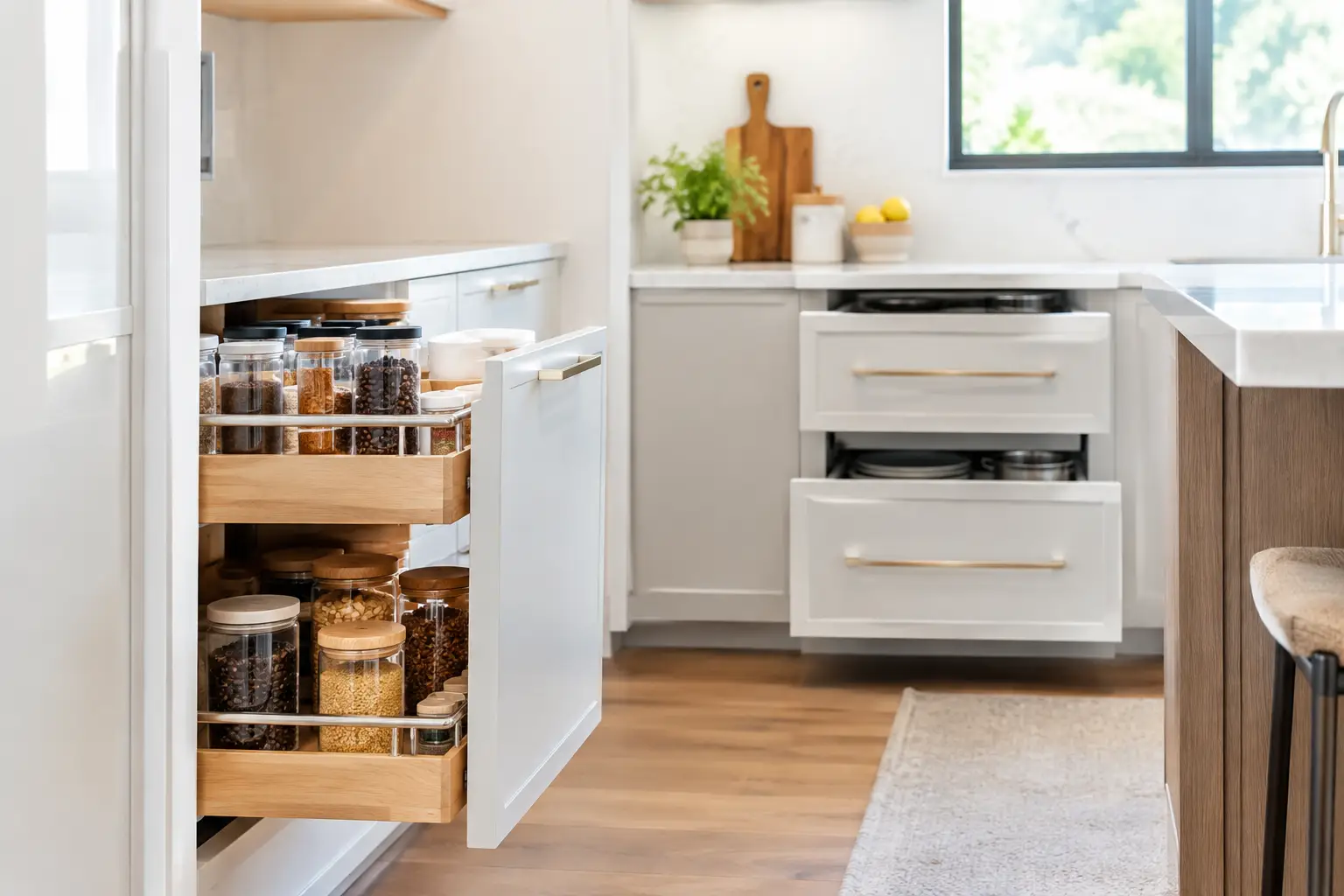
A kitchen can have plenty of square footage and still feel crowded when everyday items have no sensible place to go. Pots get stacked too high, pantry food disappears behind other pantry food, and the counter becomes the default home for small appliances. The best kitchen storage upgrades address those daily frustrations at the cabinet level, giving every item a more useful, reachable place.
For homeowners in Mobile and Baldwin Counties, better storage is often one of the most meaningful parts of a kitchen remodel. It can make a familiar kitchen easier to cook in, easier to clean, and more comfortable for the whole family without automatically requiring a larger footprint. The right choices depend on how you cook, who uses the kitchen, and what you need close at hand.
Best Kitchen Storage Upgrades for Daily Use
Replace lower cabinet shelves with deep drawers
Standard base cabinets with one fixed shelf waste a surprising amount of usable space. To reach a skillet or casserole dish in the back, you often have to kneel down and remove everything in front of it. Deep, full-extension drawers bring the entire contents of the cabinet forward, making pots, pans, mixing bowls, food containers, and small appliances much easier to see and access.
This upgrade is especially helpful for homeowners who want to reduce bending and reaching. A well-built drawer box with quality hardware can handle heavy cookware, but it needs to be specified for that job. Lightweight drawer hardware may work for utensils, yet it is not the right choice for a drawer loaded with cast iron or stacks of dishes.
Wide drawers are versatile, while narrower drawers can be a better fit beside a range or in a tight kitchen layout. Many homeowners also choose a shallow top drawer over two deeper drawers, creating a practical place for wraps, cooking tools, or linens.
Add pull-outs where shelves create dead space
Pull-out shelves and rollout trays make the contents of a cabinet accessible without changing the appearance of the kitchen. They work particularly well in pantries, lower cabinets, and tall utility cabinets where items tend to get lost in the back.
A pull-out is not always necessary in every cabinet. In some areas, adjustable shelves are more economical and perfectly functional. But in a deep pantry or a base cabinet that holds frequently used groceries, pull-outs can make a real difference. They allow you to see what you have before buying more, which can also cut down on food waste.
For a family kitchen, consider assigning pull-outs by purpose: one for snacks, one for baking supplies, and one for breakfast items. That simple organization can keep the morning rush from turning into a search through several cabinets.
Use vertical storage for trays, boards, and bakeware
Cookie sheets, cutting boards, serving platters, and cooling racks are awkward in a horizontal stack. A vertical divider cabinet gives these items individual slots so they can be removed without lifting a heavy pile.
The space above a wall oven, beside a refrigerator, or at the end of a cabinet run can often accommodate a narrow vertical storage cabinet. It is a modest addition with an outsized impact because it solves a problem almost every active kitchen has. If you enjoy entertaining, consider reserving a section for platters and serving boards that only come out for holidays or gatherings.
Make corner cabinets work harder
Corner cabinets are one of the most common sources of frustration in older kitchens. A basic corner cabinet can offer a lot of cubic space, but much of it is difficult to reach. Modern corner storage systems can bring those hidden items forward through rotating shelves, pull-out trays, or specially designed swing-out mechanisms.
These systems are useful, but they are not the best answer for every project. They add cost and have moving parts that should be installed correctly. In some kitchen designs, replacing a hard-to-reach corner with a bank of drawers, a pantry cabinet, or a more efficient cabinet layout provides better long-term value. Good kitchen planning starts by looking at the full layout instead of trying to force storage into every available corner.
Build a dedicated trash and recycling center
A pull-out trash and recycling cabinet is one of those upgrades homeowners appreciate every day. It keeps waste containers out of sight, frees up floor space, and places them where they are most useful – usually near the sink, dishwasher, or main prep area.
The location matters. A trash pull-out beside the sink makes cleanup easier, while one near the prep zone is convenient for vegetable scraps and packaging. If your household recycles regularly, select a cabinet wide enough for two containers rather than trying to make a single-bin unit do too much.
Pantry Storage Should Match Your Household
A pantry is not automatically organized just because it has shelves. Deep fixed shelves can become crowded quickly, especially for larger families or homeowners who buy in bulk. The most useful pantry storage pairs adjustable shelving with a layout built around the items you actually keep.
Tall shelves are helpful for small appliances and larger serving pieces. Shorter shelves prevent canned goods, spices, and snack boxes from being stacked out of sight. Rollout trays can make lower pantry sections more accessible, while door-mounted racks may be useful for spices or wraps when the door and cabinet depth allow enough clearance.
For a walk-in pantry, open shelves are often a practical, cost-conscious choice. For a cabinet pantry, rollout storage usually provides greater access. The right approach depends on available space, budget, and whether the pantry will serve as food storage alone or also hold countertop appliances, cleaning supplies, and extra dishes.
Give Small Appliances a Real Home
Coffee makers, toasters, mixers, air fryers, and blenders take up valuable counter space. An appliance garage, dedicated counter cabinet, or tall pantry section can keep these items handy without leaving them on display all the time.
Appliance garages work best when they are planned around the appliances you own. Measure the height, depth, and clearance needed before construction begins, especially for appliances that stay plugged in or need room for steam to escape. A mixer lift can be another worthwhile upgrade for frequent bakers, though it may not be needed if the mixer is only used a few times a year.
In a smaller kitchen, a simple appliance cabinet with a pull-out shelf may provide more value than a more elaborate mechanism. The goal is not to add features for their own sake. It is to make the kitchen easier to use on an ordinary Tuesday night.
Organize Drawers From the Inside Out
Drawer inserts turn a basic drawer into purpose-built storage. A quality utensil organizer keeps cooking tools from shifting into a crowded pile, while knife inserts protect blades and free up counter space. Spice drawer inserts can make labels visible at a glance, particularly when placed near the range or prep area.
Consider what belongs in each work zone. Utensils, knives, and cutting boards should be near the prep area. Pots, pans, and cooking tools should be near the range. Dishes and glasses are often most convenient near the dishwasher for unloading. This zone-based approach reduces unnecessary steps and helps the kitchen feel more orderly even during a busy meal.
Storage Upgrades Need Thoughtful Cabinet Design
The best storage features are built into a kitchen plan early. Adding organizers later is possible in some cases, but cabinet width, drawer depth, door swing, hardware capacity, and appliance clearances all affect what will work. A narrow cabinet may not accommodate a standard trash pull-out, for example, and a drawer under a cooktop may need to account for plumbing or electrical components.
Homeowners should also think about longevity. Soft-close drawer hardware, durable cabinet construction, and properly installed pull-outs cost more than basic options, but they receive daily use. Choosing quality where the kitchen works hardest is often a better investment than spending the budget on decorative features that do not improve function.
At Integrity Remodeling & Construction, careful planning and honest communication help homeowners make practical decisions before construction begins. That includes talking through what is not working in the current kitchen, what storage features are worth prioritizing, and where a simpler solution may be the smarter one.
A well-organized kitchen does not need to look complicated. It simply needs to support the way your household lives, cooks, gathers, and cleans up – with useful storage close to where you need it.
Related Posts