A practical aging in place renovation guide for Mobile and Baldwin County homeowners planning a safer, more comfortable home for the years ahead at home.
Best Kitchen Countertop Materials for Alabama Homes
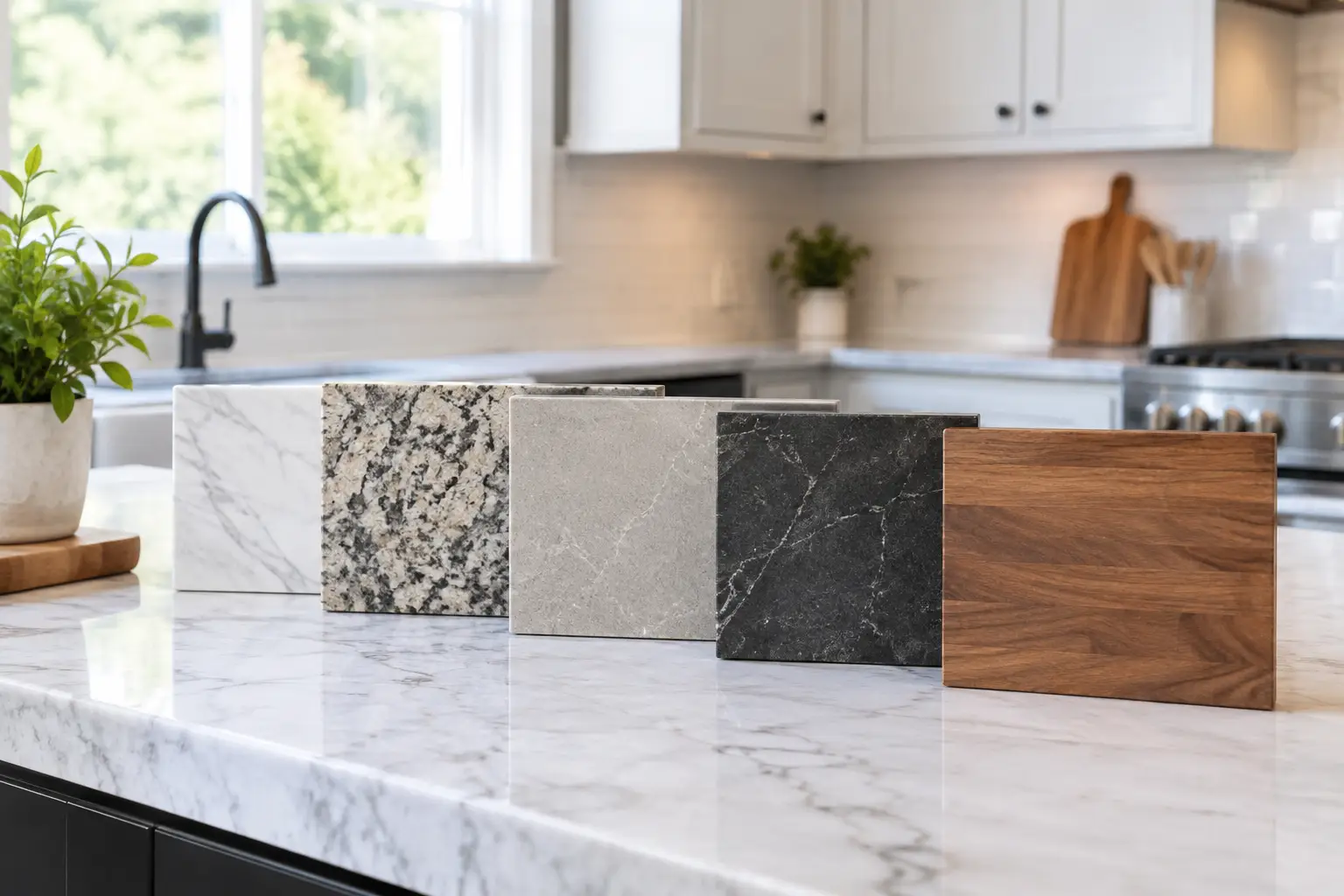
A countertop has to do more than look good on installation day. It needs to hold up to weeknight meals, holiday gatherings, dropped pans, damp glasses, and the everyday wear that comes with a busy home. Choosing among the best kitchen countertop materials means balancing appearance, maintenance, durability, and budget with the way your family actually uses the kitchen.
For homeowners in Mobile and Baldwin Counties, that decision is often part of a larger kitchen remodel. The right countertop can brighten a darker room, give older cabinetry a fresh purpose, or provide the durable work surface a growing family needs. There is no one material that is right for every kitchen, but there is usually a clear best fit once the trade-offs are understood.
Start With How You Use Your Kitchen
Before choosing a color or edge profile, consider what happens on your counters every day. A kitchen that serves as the center of family life needs something different from a kitchen used mostly for entertaining. If you cook often, set hot cookware down in a hurry, or have children doing homework at the island, durability and low maintenance may matter more than a rare natural pattern.
It also helps to look at the cabinets, lighting, flooring, and overall age of the home. A sleek white quartz may suit a clean, updated kitchen in Daphne or Spanish Fort. A richly veined granite, warm wood surface, or honed stone may feel more at home in a historic Mobile property. Good remodeling decisions come from seeing the room as a whole, not choosing each finish separately.
Best Kitchen Countertop Materials Compared
Quartz: Reliable and Low Maintenance
Quartz remains one of the most popular choices for remodeled kitchens because it offers a consistent appearance with very little upkeep. It is an engineered surface made from natural quartz combined with resins and pigments. That process allows for a wide range of colors, from simple whites and soft grays to patterns that resemble marble or natural stone.
Quartz is nonporous, so it does not normally need sealing. It resists common stains from coffee, cooking oil, juice, and sauces, making it a practical option for active households. It is also durable against scratches and everyday use.
The trade-off is heat. Quartz can be damaged by very hot pans, particularly near seams or edges, so trivets are still a good habit. It can also cost more than entry-level materials, especially for premium colors and thicker slabs. Still, for homeowners who want a polished, dependable countertop without regular sealing, quartz is often hard to beat.
Granite: Natural Character and Strong Performance
Granite is a natural stone, which means every slab has its own movement, mineral flecks, and color variation. For homeowners who want a countertop with genuine character rather than a uniform manufactured pattern, that uniqueness is part of the appeal. Granite can work equally well in traditional, coastal, and transitional kitchens.
When properly sealed, granite handles normal kitchen use very well. It is heat resistant, tough, and less likely to scratch than many other countertop options. A hot baking dish or skillet is less of a concern on granite than on quartz, although using a trivet is still wise for protecting any finished surface.
Granite does require periodic sealing, and some lighter or more porous varieties need more attention than others. The exact maintenance needs depend on the slab selected. During material selection, it is worth asking about porosity, finish, and recommended care rather than assuming all granite performs the same way.
Porcelain Slabs: Modern, Heat Resistant, and Thin Profile
Porcelain slab countertops have gained attention for their clean appearance and strong resistance to heat, stains, and UV exposure. They can be especially appealing in kitchens with large islands, waterfall edges, or a modern, streamlined design. Many porcelain options convincingly resemble marble, concrete, or natural stone.
Unlike marble, porcelain is generally less vulnerable to staining and etching from acidic foods. It is also a good option for kitchens with strong natural light because it is less likely to fade. For homeowners considering matching indoor and outdoor kitchen surfaces, porcelain can offer useful design continuity.
Its limitations are mostly related to fabrication and impact. Porcelain is extremely hard but can chip at an exposed edge if struck sharply. It requires experienced measurement, cutting, and installation. This is not a material to treat as a budget shortcut, but it can be an excellent long-term choice when the design calls for it.
Solid Surface: Smooth, Repairable, and Flexible
Solid surface countertops are made from acrylic or polyester resins and mineral materials. They offer a smooth, nonporous surface with seams that can be made far less noticeable than those in many other materials. Integrated sinks and custom shapes are also possible, which can create a clean, continuous look.
This material is easier to repair than stone if it becomes scratched or lightly damaged. That makes it a sensible choice for homeowners who value a uniform appearance and want a surface that can be renewed over time. Solid surface is also comfortable to the touch and available in many colors.
It is not as heat resistant or scratch resistant as quartz, granite, or porcelain. Cutting directly on it and placing hot cookware on it can leave marks. It performs best in kitchens where ease of cleaning and a smooth appearance are priorities, and where family members are willing to use cutting boards and hot pads.
Laminate: Budget-Friendly With Better Style Options
Laminate has come a long way from the designs many homeowners remember from decades past. Current options include realistic stone looks, warm wood patterns, matte finishes, and cleaner edge details. For a kitchen update where the budget needs to stretch across cabinets, flooring, paint, lighting, and appliances, laminate can be a practical choice.
It is easy to clean and does not need sealing. It can also provide a dramatic visual improvement at a lower material cost than natural or engineered stone. That may make it the right answer for a secondary kitchen, rental property, laundry-room counter, or a renovation where other structural work takes priority.
The compromise is durability. Laminate can scratch, chip, swell at damaged seams, or scorch under hot cookware. It does not bring the same long-term resilience as stone, but it should not be dismissed when value and appearance need to work together.
Butcher Block: Warmth for Islands and Work Zones
Butcher block brings a warmth that stone surfaces cannot duplicate. It works particularly well as an island top, baking station, or accent section paired with quartz or granite around the perimeter. In older homes, it can add a natural, lived-in quality without making the entire kitchen feel dated.
Wood requires more care than most countertop materials. It needs regular oiling or a protective finish, and standing water should be wiped up promptly. It can scratch and dent, but many homeowners appreciate that it can be sanded and refinished rather than replaced.
Butcher block is a good fit when you enjoy the material’s natural aging process. If every mark will be frustrating, a stone or engineered surface is likely the better choice.
Marble: Beautiful, but Best for the Right Household
Marble has a classic look that is difficult to imitate completely. Its soft veining and natural variation can make a kitchen feel refined, especially in historic homes and traditional designs. It is also naturally cool, which bakers often appreciate.
However, marble is softer and more porous than granite, quartz, or porcelain. Lemon juice, wine, vinegar, and other acidic foods can etch the surface, while spills may stain if not addressed quickly. Honed marble can make marks less noticeable than polished marble, but it does not eliminate the need for care.
For the right homeowner, marble’s patina becomes part of its charm. For a high-traffic kitchen where maintenance needs to stay simple, a marble-look quartz or porcelain may deliver a similar visual direction with fewer concerns.
Details That Affect the Final Cost
Material choice is only one part of countertop pricing. The total project can change based on slab size, thickness, color availability, backsplash material, edge profile, sink cutouts, cooktop cutouts, seam placement, demolition, and any needed cabinet adjustments. A large island with a waterfall edge, for example, uses more material and requires more fabrication than a standard perimeter counter.
This is why an honest estimate should account for the full scope rather than focusing only on a price per square foot. A well-planned kitchen remodel also confirms that base cabinets are level and properly supported before a heavy stone surface is installed. Quality craftsmanship starts below the countertop, where the finished work is not always visible.
Choosing a Countertop You Will Still Like Years From Now
Trends can provide useful inspiration, but a countertop is a long-term decision. A classic neutral surface often gives future flexibility with paint colors, cabinet hardware, and lighting. That does not mean every kitchen must be white or gray. A deeper granite, a warm wood accent, or a softly patterned quartz can make the room feel personal while remaining practical.
The best choice is one that suits your household, your home, and your willingness to maintain it. Bring samples into the kitchen, view them in morning and evening light, and talk through the practical details before installation begins. A countertop should make daily life easier while giving you confidence that your kitchen was built with care.
Related Posts