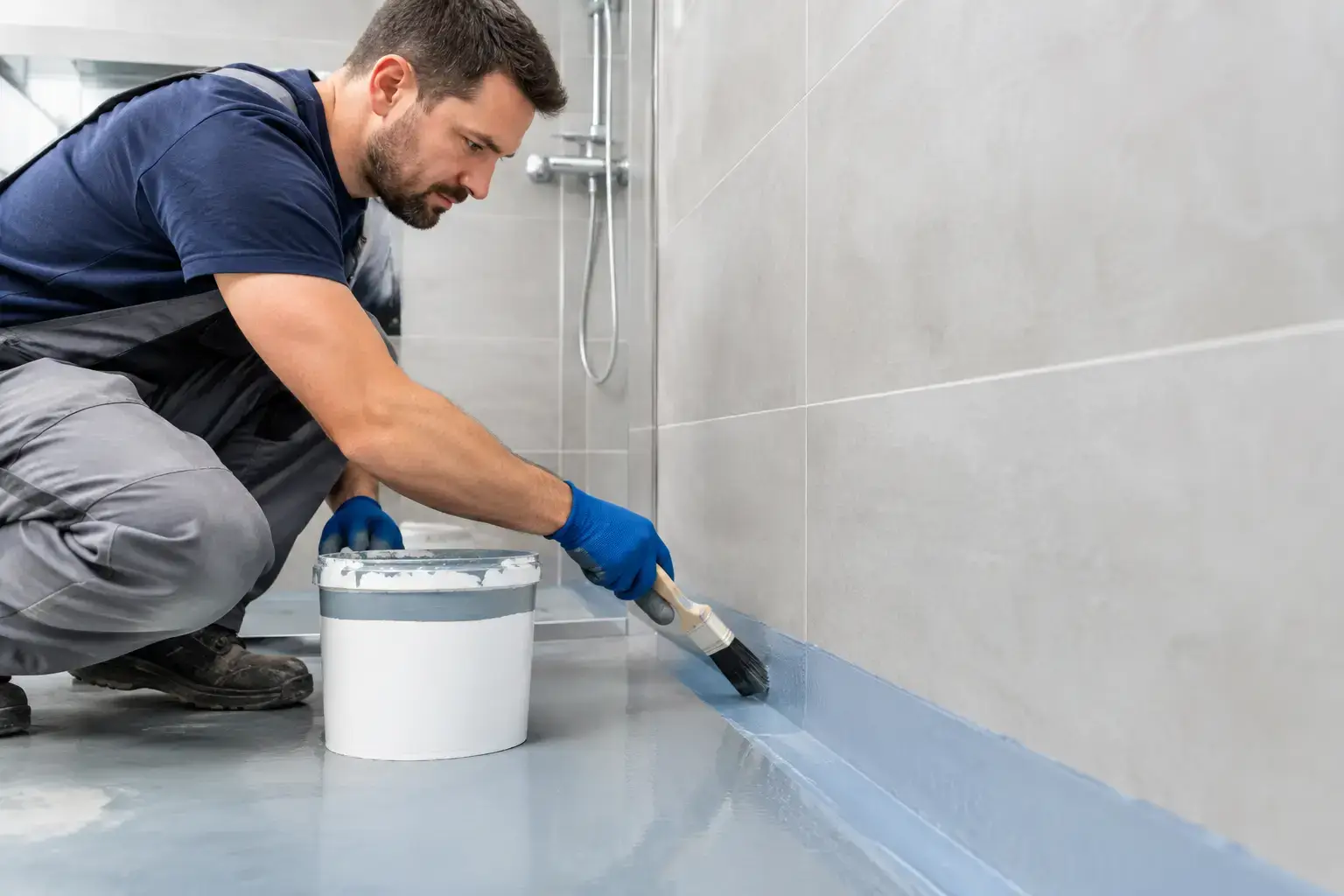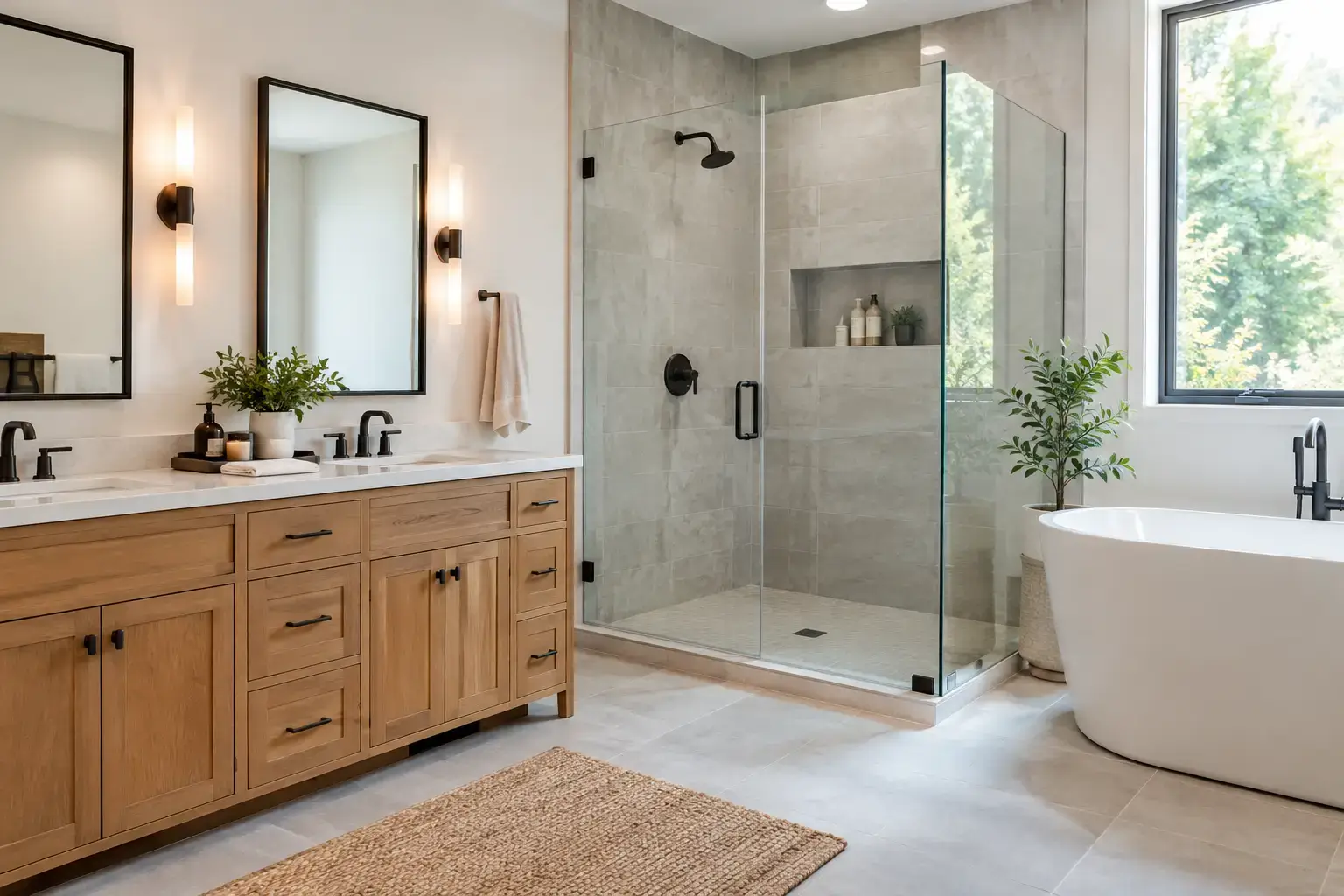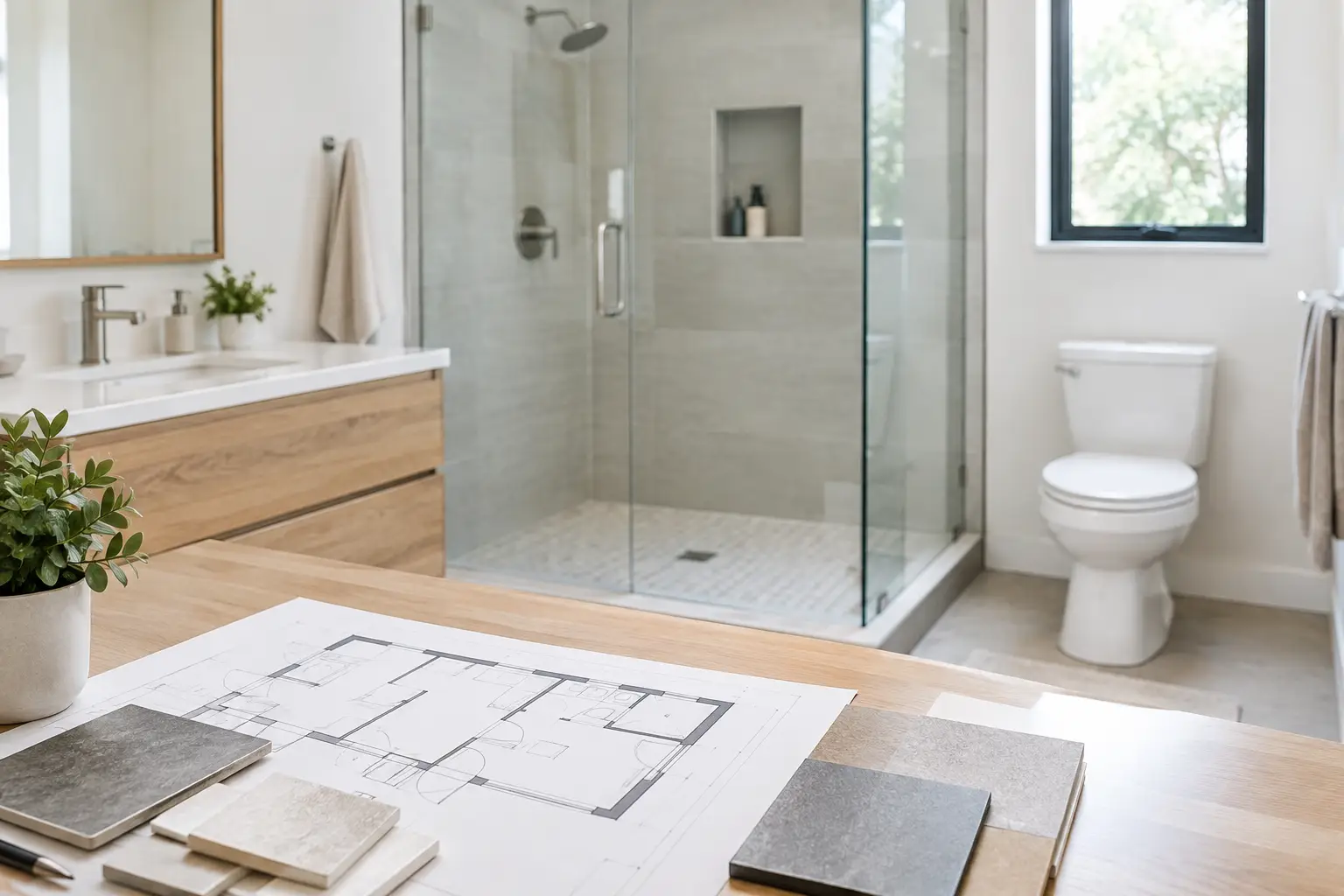
This guide to bathroom waterproofing helps Mobile and Baldwin County homeowners prevent leaks, protect finishes, and plan a bathroom remodel with confidence.
How to Add Bathroom Storage That Works
A bathroom can look clean at the end of the day and still feel crowded every morning. When towels are stacked on the counter, toiletries spill out of drawers, and cleaning supplies have no home, the problem is usually not a lack of square footage. It is a lack of purposeful storage. Learning how to add bathroom storage starts with looking closely at how your household actually uses the room.
For homeowners in Mobile and Baldwin Counties, a well-planned bathroom remodel can turn a cramped, dated space into one that supports busy family mornings, visiting guests, or aging-in-place needs. The best solution is rarely one more basket. It is a combination of the right cabinetry, smart use of wall space, and a layout that keeps everyday items close at hand without leaving them on display.
Start With What Needs a Home
Before choosing a vanity or adding shelves, take inventory of what belongs in the bathroom. Most storage plans fall short because they are built around a general idea of “more space” rather than the items that need storing.
Separate daily-use items from occasional supplies. Toothbrushes, skincare products, medications, hair tools, makeup, toilet paper, towels, and cleaning products each need different types of storage. A deep drawer that works well for extra towels may be frustrating for small cosmetics. Likewise, open shelving can be useful for folded washcloths but may create visual clutter when used for half-empty bottles and personal care products.
Also consider who uses the bathroom. A hall bath shared by children needs easy-to-reach drawers and durable surfaces. A primary bathroom may need room for two people to get ready at once. In a guest bathroom, simple storage for fresh towels, toilet paper, and basic toiletries may be enough. Planning around real habits helps prevent a remodel from looking good on day one but feeling inconvenient a month later.
How to Add Bathroom Storage With the Right Vanity
The vanity is often the hardest-working storage feature in a bathroom. Replacing an open pedestal sink with a properly sized vanity can make an immediate difference, but size alone is not the answer. The interior configuration matters just as much as the cabinet width.
Drawers are typically more useful than a large, open cabinet below the sink. They bring items forward, so homeowners do not have to kneel down and search in the back of a dark cabinet. Shallow top drawers can organize grooming products and makeup, while deeper drawers can hold hair dryers, styling tools, and larger bottles. Built-in dividers keep small items from becoming a jumble.
A double-sink vanity can be a good investment in a primary bathroom, especially for couples with different morning routines. However, it does take away some counter and drawer space. In a narrower bathroom, one larger sink with generous counter space and better drawer storage may serve the room better than two small sinks.
For a bathroom with limited floor space, a wall-mounted vanity can create a lighter appearance and leave room underneath for a scale or small storage basket. It is not always the best fit for households that need maximum concealed storage, but it can be a practical choice when visual openness is a priority.
Use Tall Cabinets Where Floor Plans Allow
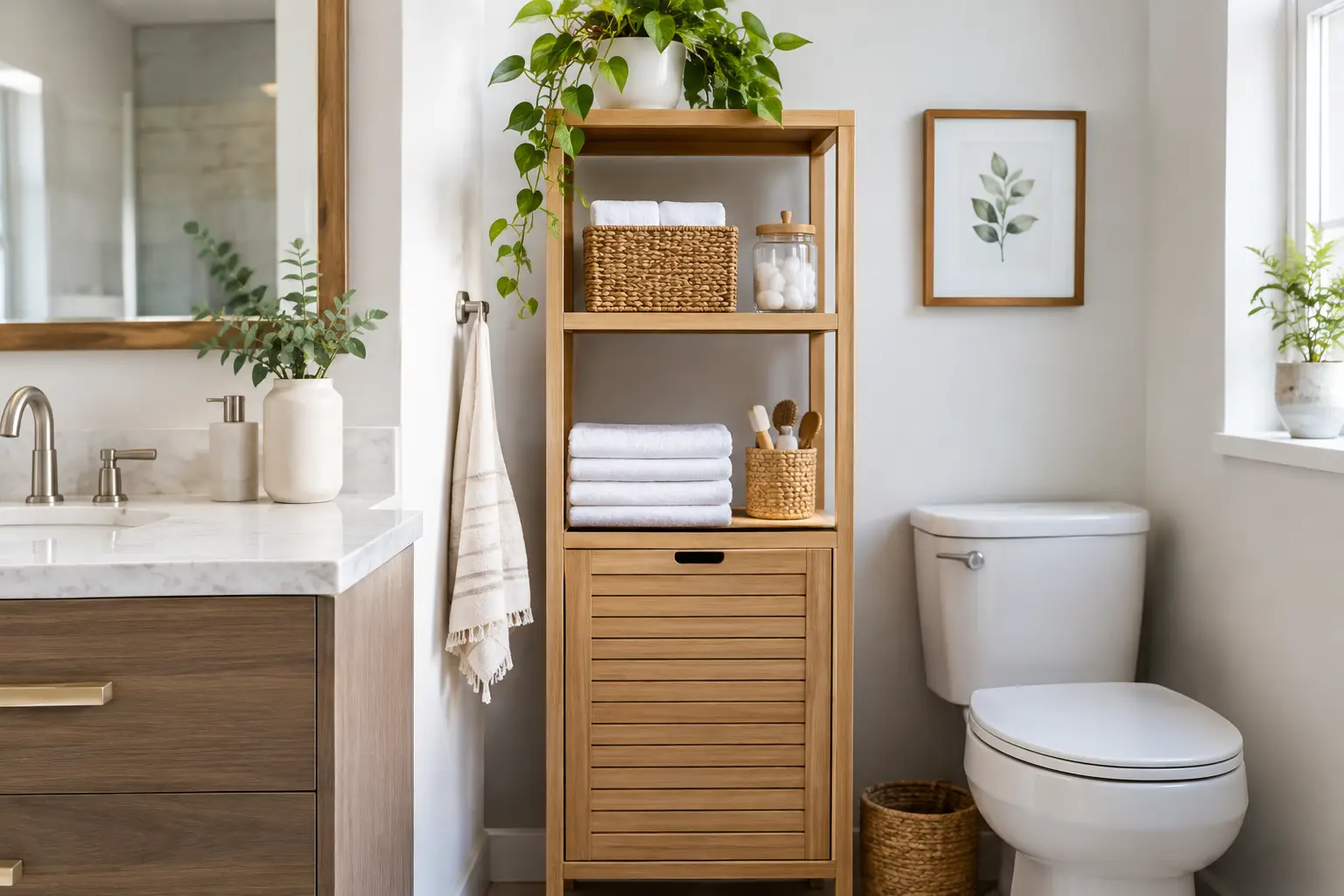
A narrow linen cabinet can hold far more than a row of decorative shelves. If there is unused wall space near the vanity, toilet, or shower entry, a tall cabinet may provide room for towels, extra paper goods, and cleaning supplies without changing the room’s footprint.
Custom or semi-custom cabinetry is especially valuable in older homes, where walls may not be perfectly square and standard cabinet sizes can leave awkward gaps. A carefully measured cabinet can make use of a small recess or an underused corner while still looking like it belongs in the room.
Make the Walls Work Harder
Bathroom storage does not have to stop at the vanity. Walls offer valuable space, particularly in smaller bathrooms where every inch of floor area matters.
A recessed medicine cabinet is one of the most effective upgrades for everyday items. Unlike a surface-mounted cabinet, it sits inside the wall cavity, giving you concealed storage without projecting far into the room. It can hold medications, razors, skincare products, and other small necessities while keeping the countertop clear. Proper installation matters, since plumbing, wiring, and wall framing may affect where it can go.
Open shelves can also be useful, but they work best when used selectively. Two or three sturdy shelves above the toilet can hold neatly folded towels, attractive containers, or a small tray of guest essentials. In a busy family bathroom, open storage should support the room rather than become another place for clutter to collect.
Hooks are another simple improvement that homeowners often overlook. Towel bars can be useful, but hooks make it easier for children to hang wet towels and robes. Install them at heights that fit the people using the space. A few well-placed hooks behind the door or on an open wall can reduce the pileup on the floor without taking up cabinet space.
Look for Storage Opportunities During a Remodel
The best time to add bathroom storage is often when the room is already being renovated. Opening walls or replacing fixtures creates opportunities that are difficult and more costly to add later.
A shower niche, for example, keeps shampoo, soap, and body wash off the tub ledge or shower floor. It should be sized for the products your household uses, not just designed as a small decorative feature. A larger niche, or two stacked niches, can make a walk-in shower easier to keep clean and more convenient to use.
Built-in ledges and recessed shelving can work well around a tub or inside a water closet. If a bathroom layout includes a bump-out, an unused corner, or space beside a chimney chase, those areas may be adapted for storage rather than covered with blank drywall. These details require careful planning around waterproofing, framing, and access, but they can give the room a finished, custom feel.
Do not ignore storage outside the bathroom door, either. In some homes, a nearby hallway closet can be redesigned as a linen closet, especially when the bathroom itself cannot accommodate tall cabinetry. This can be a better choice than forcing too many cabinets into a small room and making it feel tight.
Keep Storage Accessible for the Long Term
Storage should make a bathroom easier to use, not harder to navigate. That becomes particularly important for retirees, homeowners planning to age in place, and anyone with limited mobility.
Drawers generally require less bending and reaching than low cabinet shelves. Pull-out shelves, easy-grip hardware, lever-style handles, and well-lit interiors can make a meaningful difference. Frequently used items should stay between waist and shoulder height whenever possible, while extra supplies can be stored higher or lower.
If accessibility is a concern, avoid filling every open wall with cabinets that narrow the walking path. A dependable bathroom layout leaves enough room to move comfortably around the vanity, toilet, and shower. The goal is not simply to fit more storage into the room. It is to create a space that remains safe and useful as needs change.
Choose Materials That Stand Up to Bathroom Conditions
Bathrooms deal with humidity, splashes, and frequent cleaning, so storage materials need to be chosen with that in mind. Quality cabinetry with a durable finish will hold up better than low-grade products that swell or peel when exposed to moisture. Proper ventilation is also part of protecting cabinets, walls, and stored linens.
For shelving, solid mounting is more important than appearance alone. Towels are heavier than they look, and a shelf loaded with folded bath linens needs secure support. In historic homes and older properties, wall conditions may be less predictable, which is one reason careful measuring and experienced installation matter.
A bathroom should not require constant rearranging just to get through the day. Thoughtful storage gives each item a place, protects valuable counter space, and makes the room feel calmer from the first morning routine to the last. If your current bathroom cannot keep up with the way your household lives, Integrity Remodeling & Construction can help you plan improvements with quality craftsmanship, honest communication, and storage that fits the room for years to come.
Related Posts