Is a sunroom worth it? See the costs, comfort factors, and value a well-planned sunroom can bring to homes in Mobile and Baldwin Counties, Alabama today.
Vinyl Siding vs Fiber Cement for Gulf Coast Homes
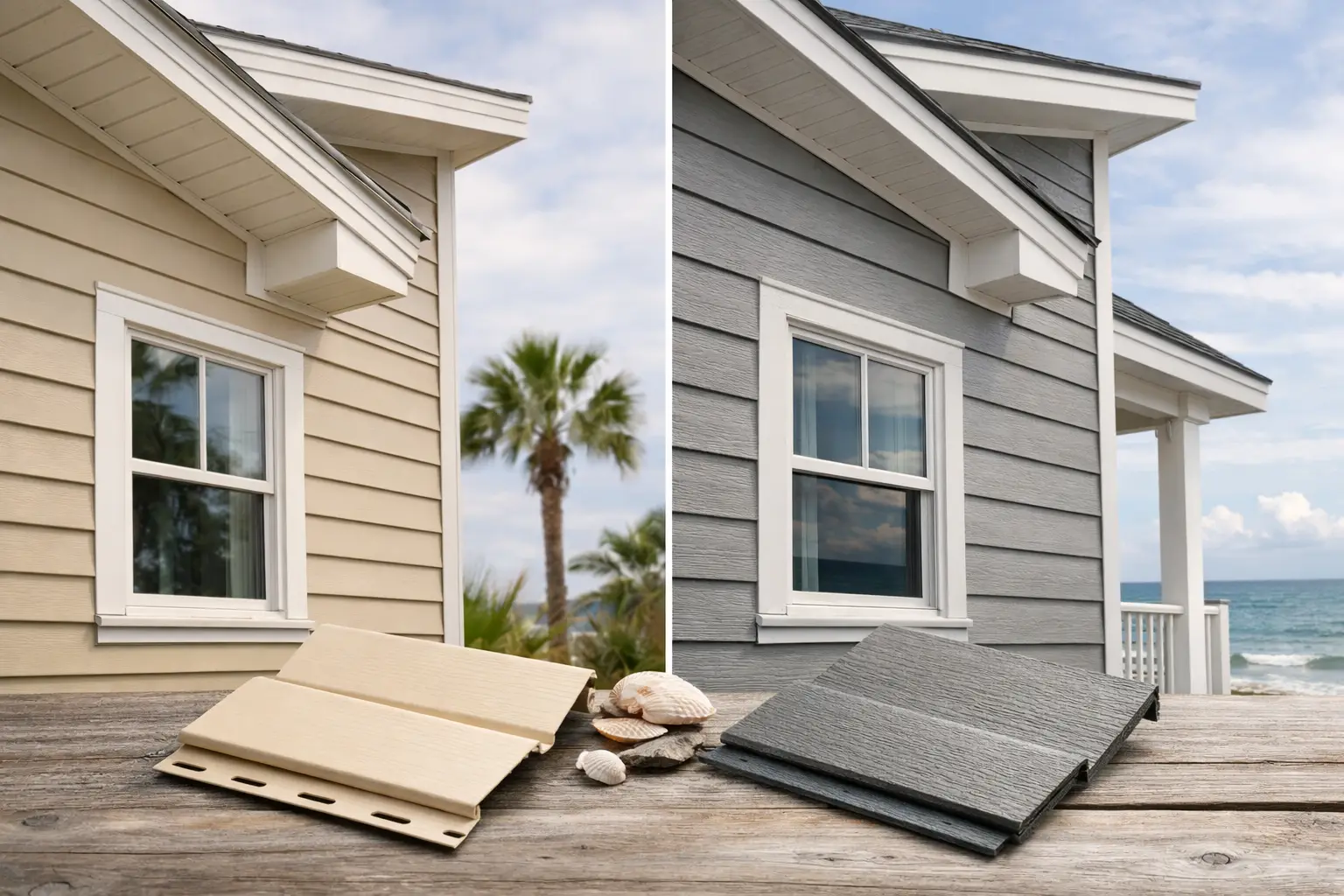
A siding decision in Mobile or Baldwin County has to account for more than curb appeal. Sun, heavy rain, humidity, wind-driven storms, and salt air near the coast all put an exterior to work. When weighing vinyl siding vs fiber cement, the better choice depends on your budget, your home’s condition, the look you want, and how much maintenance you are prepared to handle over time.
Both materials can improve an aging exterior and protect the structure beneath it. But they perform differently, install differently, and have different long-term costs. A clear comparison helps you invest with confidence rather than choosing based on the lowest initial price alone.
Vinyl Siding vs Fiber Cement: The Main Difference
Vinyl siding is a lightweight plastic exterior cladding installed in overlapping panels. It is widely chosen because it is affordable, resists moisture, and never needs painting. Modern vinyl comes in many colors and profiles, including options designed to resemble traditional lap siding, board and batten, and shake-style accents.
Fiber cement is a rigid siding product made from cement, sand, cellulose fibers, and water. It is manufactured in planks, panels, and shingle-style pieces that can closely resemble painted wood. It is typically installed and painted as part of a complete exterior system.
The practical difference is simple: vinyl is generally the lower-cost, lower-maintenance option, while fiber cement offers greater durability, a more substantial appearance, and more flexibility for homeowners who want a painted finish. Neither is automatically right for every house.
Cost: Upfront Price Versus Long-Term Value
For many homeowners, the first question is cost. Vinyl siding usually costs less to purchase and install because it is lighter, faster to handle, and does not require painting after installation. That can make it a sensible choice for a home that needs an exterior refresh without turning the project into a major renovation.
Fiber cement generally has a higher installed cost. The material is heavier, cutting it requires specialized tools and safety practices, and installation demands careful attention to clearances, flashing, fastening, and sealing. It also needs a quality paint system, whether it arrives factory-finished or is painted after installation.
That initial difference does not mean vinyl is always the better value. Fiber cement can be an especially worthwhile investment when a homeowner plans to stay in the home for many years, wants a higher-end architectural appearance, or is updating an older property where preserving the home’s character matters. On the other hand, a well-installed vinyl system can provide a clean, reliable exterior at a more manageable price point.
The most useful comparison is not just material price. It is the total scope of work. If existing trim is deteriorated, water has damaged sheathing, or windows and siding are being replaced together, those conditions should be addressed before new siding goes up. Covering a problem does not correct it.
How Each Material Handles Gulf Coast Weather
Humidity and rain are facts of life along Alabama’s Gulf Coast. Vinyl siding handles moisture well because the panels themselves do not rot. Its installation system also allows the material to expand and contract as temperatures change. Proper installation is critical, since panels need room to move and the wall behind them still needs a dependable weather-resistive barrier and flashing details.
Fiber cement is not damaged by insects and is far more resistant to rot than traditional wood siding. It also holds up well against heat and can withstand stronger impacts than standard vinyl in many situations. For homes exposed to intense sun, fiber cement’s painted surface typically provides a more stable, solid-looking finish over time.
However, fiber cement is not maintenance-free. Cut edges, joints, trim transitions, and penetrations must be properly sealed. Paint will eventually need renewal, particularly on elevations that receive direct sun and weather exposure. If that maintenance is neglected, water can find vulnerable areas just as it can with any painted exterior product.
Vinyl’s biggest weather-related drawback is its potential to crack or dent from a hard impact. Extreme heat can also cause problems if it is installed too close to high-reflective windows or roofing materials. These are not reasons to rule vinyl out, but they are reasons to use an experienced installer who understands the product and local conditions.
Appearance and Architectural Style
This is where personal preference often decides the project. Vinyl siding has improved significantly, but it still has a different visual character from painted wood or fiber cement. The panel seams, corner pieces, and surface texture are usually more noticeable when viewed up close. For many traditional ranch homes, newer homes, and practical exterior updates, that is not a concern at all.
Fiber cement offers sharper lines and a more authentic painted-siding appearance. It can be installed in long lap boards, vertical panels, shingle patterns, and custom combinations with trim. It is often a strong fit for Craftsman homes, historic properties, cottages, and homes where the exterior details are a major part of the property’s appeal.
For historic home remodeling, material selection deserves extra attention. The goal may be to preserve original proportions, trim profiles, and the visual depth of traditional wood siding while improving durability. In those cases, fiber cement may be the closer match, though each home should be evaluated individually. Some older homes have moisture or structural issues that need repair before any new exterior finish is installed.
Maintenance Expectations
Homeowners often choose vinyl because it removes painting from the regular maintenance list. Routine care is straightforward: rinse away dirt, pollen, and mildew as needed, and inspect the siding after storms for loose or damaged panels. Avoid harsh pressure washing, which can force water behind the siding or damage its surface.
Fiber cement requires more attention, but it rewards that attention with a long-lasting finish. Homeowners should keep vegetation trimmed back, make sure gutters move water away from the house, inspect caulked joints, and plan for repainting when the coating begins to wear. The timing varies by sun exposure, paint quality, and maintenance, but repainting is a normal part of owning a painted exterior.
The right question is not whether one material has maintenance and the other does not. Every exterior needs inspection and care. The question is whether you would rather maintain painted surfaces periodically or choose a prefinished material with fewer finish-related tasks.
Installation Quality Matters More Than Most Homeowners Realize
Even premium siding can fail when the installation is rushed. Flashing around windows, doors, roof intersections, decks, and penetrations is what directs water away from the wall assembly. Housewrap, drainage planes, trim details, and correctly installed fasteners all matter.
This is especially true when replacing siding on an older home. Removing existing cladding can reveal soft framing, damaged sheathing, missing flashing, or long-standing water intrusion. Those discoveries are not always welcome, but identifying and correcting them is far better than sealing them behind a new exterior.
A dependable contractor should explain the condition of the home, provide a clear scope of work, and communicate promptly if hidden repairs are found. At Integrity Remodeling & Construction, that kind of honest communication is part of treating a siding project as a lasting improvement, not a cosmetic cover-up.
Which Siding Is Right for Your Home?
Vinyl siding may be the better fit if you want a budget-conscious exterior update, prefer minimal maintenance, and like the available colors and profiles. It can provide reliable protection and a clean appearance when it is installed correctly over a properly prepared wall.
Fiber cement may be the better choice if you want the appearance of painted wood, stronger impact resistance, and greater design flexibility. It is often well suited to homeowners making a long-term investment in curb appeal, especially on older or more detailed homes.
Before deciding, look beyond sample boards. Consider your home’s style, the condition of the existing exterior, nearby trees and moisture exposure, your plans for repainting, and whether windows, trim, gutters, or repairs should be included in the same project. A careful on-site evaluation can turn a difficult choice into a clear plan for an exterior that looks right and performs well through many Gulf Coast seasons.
Related Posts